Romestead Co-op Guide: Roles, Shared Storage and Multiplayer Tips
A practical Romestead co-op guide for groups of two to eight: decide who owns building, resources, combat and god progress, then keep the settlement readable when the night pressure starts.
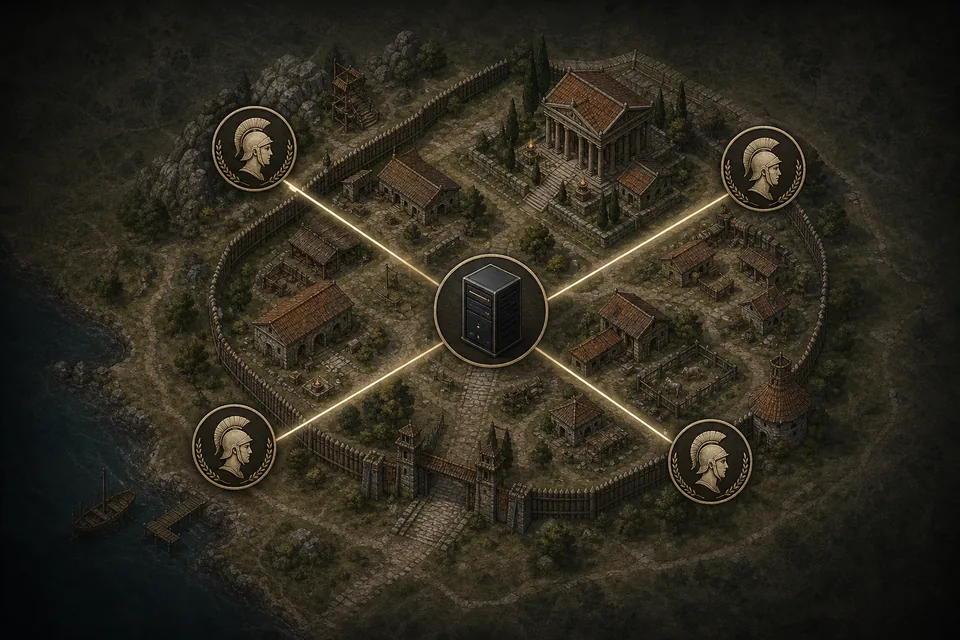
On this page
What makes a Romestead co-op run work?
This Romestead co op guide starts with a shared agreement about who owns the next constraint rather than a rigid class list. Romestead combines exploration, combat, settlement building, farming and Roman-god progression, so every player can find something productive to do. The problem appears when nobody owns the handoff between those systems. A miner returns with stone but has no agreed drop point; a fighter leaves the walls to gather; or two builders spend the same scarce materials on different projects.
Use a short meeting at the start of each session. Name the current milestone, choose one owner, and set a time to review it. For example, the group might agree that the first target is a stable food and storage loop, the second is a safer route to the next resource area, and only then is a larger building project approved. This keeps the co-op world moving even when the exact map or balance changes between Early Access updates.
Host or join a Romestead co-op world
For a casual group, start with the official Steam multiplayer flow and keep the host decision simple. Choose the player with the most reliable schedule and connection, then make that person the world owner for the session. The host should announce the save name, the intended start time and the current milestone before inviting everyone. Menu labels and Early Access behavior can change, so confirm the live Steam page and in-game options when a patch lands.
If the group plays at different times, a dedicated server may be more useful than a normal hosted session. That is an infrastructure choice, not a requirement for every co-op run. Compare save access, backups, update timing, logs and recovery before paying for hosting. Keep the server questions in the dedicated server guide and use this page for the decisions that happen inside the shared settlement.
| Session choice | Best fit | Agree before starting |
|---|---|---|
| One player hosts | A regular small group playing together | Host availability, save name, next milestone |
| Dedicated hosting | A group that needs the world available between sessions | Save access, backups, updates, logs and cost |
| Short drop-in session | Testing a build or learning the first hour | One small objective and a safe return point |
Romestead co-op roles by group size
Two players should begin with a builder-logistics split. The builder owns placement, housing, production order and the settlement checklist. The logistics player gathers the current bottleneck, moves heavy materials, checks food and keeps a reserve for repairs. Both players can fight, but one person should remain the decision owner when a raid or shortage interrupts the plan.
Three or four players can add a dedicated explorer or combat lead. That player scouts a short loop, records useful locations and returns before the settlement loses track of them. During a threat, the combat lead calls the fallback position while the builder protects the core production route. This is more reliable than assigning everyone a permanent profession and then ignoring the problem that actually needs help.
| Group size | Useful ownership | Handoff rule |
|---|---|---|
| 2 players | Builder plus logistics and combat partner | Review the next build before spending the reserve |
| 3-4 players | Add explorer or combat lead | Return with a location note before starting another trip |
| 5-8 players | Settlement, supplies, exploration and defense leads | Announce role changes and keep one shared milestone |
Shared storage and logistics rules
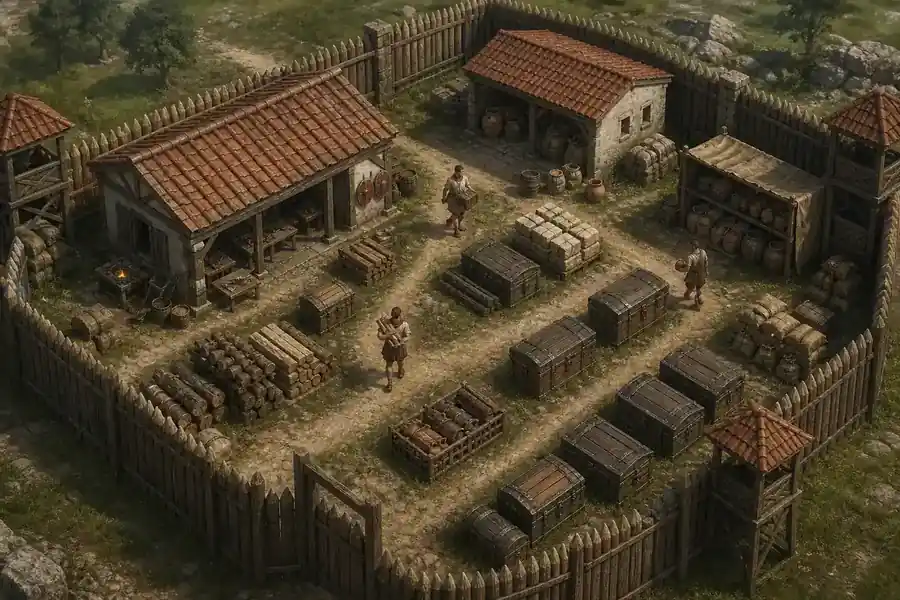
Shared storage is the fastest way for a co-op settlement to feel organised or chaotic. Choose one visible drop point for food and common construction materials, then explain what belongs there. Keep personal gear, rare finds and items reserved for a named project in separate containers or clearly marked slots. The exact container names can change, but the social rule is stable: nobody should have to search every player inventory to find the material needed for the current milestone.
Place common storage close to the work that consumes it. A player who gathers stone should not have to walk across the settlement to deposit every load, and a builder should not start a distant project without checking the shared reserve. Review the route after a few trips. If players repeatedly cross the same space, move the drop point or create a second small buffer rather than adding more workers immediately.
Coordinate progression, gods and exploration
Romestead asks the group to balance settlement growth with exploration, combat and the restoration of Roman gods. Decide which system is the current gate before anyone spends rare inputs. If the group needs a safer route, finish the route. If production is starving, improve the supply loop. If a boss or god milestone is next, prepare everyone for the travel and return path instead of sending one player into a long expedition without a recovery plan.
Treat god decisions as a team conversation even when one player performs the interaction. Say what the blessing or milestone is expected to help with, what the group gives up by choosing it now, and when the decision will be reviewed. This avoids two players quietly pursuing different priorities while the settlement waits for one shared result.
| Question | Team decision | Why it helps |
|---|---|---|
| What is blocking the settlement? | Name one bottleneck before expanding | Prevents parallel projects from draining the reserve |
| Who owns the next expedition? | Choose a scout and a return time | Keeps the settlement covered and the route repeatable |
| Which god or milestone comes first? | Agree on the next shared benefit | Stops conflicting progress choices and wasted inputs |
Night raids: make the fallback obvious
The official Steam description says the dead walk at night, so every co-op group needs a night plan even if the first sessions feel calm. Pick a fallback location near the settlement core, tell everyone which route is safe, and keep a small repair and food reserve reachable from it. The point is not to predict an exact wave; it is to stop four players from defending four different corners while an important building is left alone.
Use short calls during pressure: 'hold', 'repair', 'retreat' and 'scout'. The combat lead can call the immediate position, while the builder decides whether a damaged structure is worth the reserve. After the night, walk the route together and record one change for the next session. A single repaired bottleneck is usually more useful than a large unplanned wall extension.

Before night
Confirm the fallback, repair reserve, food access and who calls the first move.
After night
Name one route or storage change and write it into the next-session plan.
Co-op mistakes that waste a Romestead session
The most expensive mistake is silent ownership. If everyone assumes someone else is watching food, repairs or the next building, the group discovers the gap only when the settlement is already under pressure. Announce the owner and the handoff in plain language, then change it openly when the task is finished.
The second mistake is treating a full inventory as progress. A room full of materials does not help if the destination, worker route or next output is unclear. Ask what the material is for, where it should go and whether the current build can be completed before starting another one.
Romestead co-op session checklist
| Check | Decision | Owner |
|---|---|---|
| World | Host, save name and start time are clear | Host |
| Milestone | One next result is written before spending resources | Settlement lead |
| Roles | Building, supplies, exploration and defense have owners | Whole group |
| Storage | Shared food and material drop points are known | Logistics lead |
| Progression | The next god, boss or route decision is agreed | Progression lead |
| Night | Fallback position, repair reserve and call words are known | Combat lead |
Romestead co-op FAQ
Sources and current-value checks
- Official Romestead Steam page - Primary source for the 1-8 player description, difficulty scaling, Early Access context and current store information.
- Romestead dedicated server setup guide - Community reference for server infrastructure; verify commands and ports against the live build.